Get access to a curated list of the latest blog posts covering a wide range of topics from the telecom industry.

Archives: Social Articles

1. What is Machine Learning? 

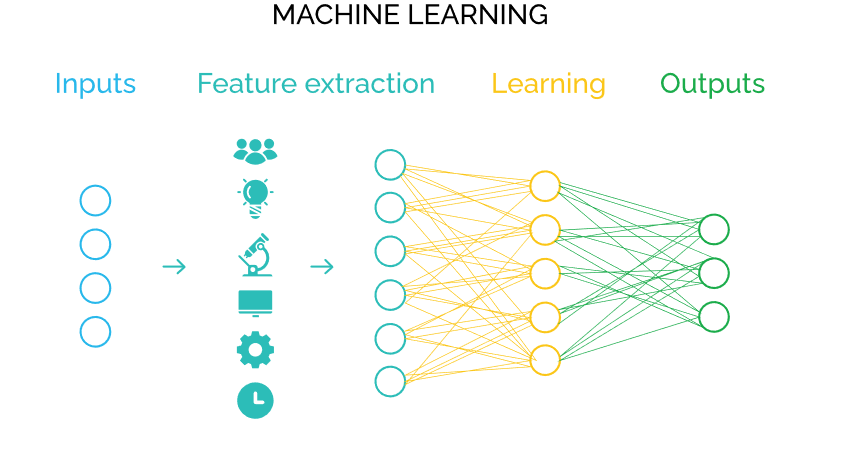
Machine Learning is a subset of artificial intelligence (AI) that involves developing algorithms and models that enable computers to learn from and make predictions or decisions based on data. It focuses on creating systems that can improve their performance over time without being explicitly programmed. 

2. What is the difference between Artificial Intelligence, Machine Learning, and Deep Learning? 

Difference between Artificial Intelligence, Machine Learning, and Deep Learning: 

Artificial Intelligence (AI): AI is the broader concept of creating machines that can simulate human intelligence. It encompasses various techniques, including Machine Learning and Deep Learning, to enable machines to perform tasks that typically require human intelligence. 

Machine Learning: Machine Learning is a subset of AI that involves training models on data to make predictions or decisions. It’s about learning patterns from data to generalize and perform well on new, unseen data. 

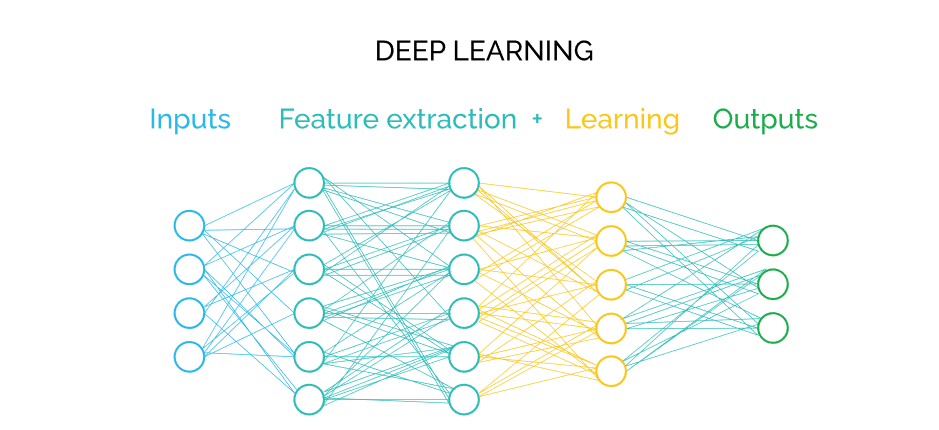
Deep Learning: Deep Learning is a subfield of Machine Learning that focuses on using neural networks with multiple layers (deep neural networks) to learn intricate patterns and representations from data. 

3. How does Machine Learning work? 

Machine Learning involves several steps: 

  • Data Collection: Gather relevant data that the model will learn from. 
  • Data Preprocessing: Clean, transform, and prepare the data for training. 
  • Feature Selection/Extraction: Choose or extract relevant features from the data. 
  • Model Selection: Choose a suitable algorithm or model architecture. 
  • Training: Feed the model with labeled data to learn patterns and relationships. 
  • Evaluation: Assess the model’s performance on unseen data using metrics. 
  • Prediction/Inference: Use the trained model to make predictions or decisions on new data. 

machine learning

 4. What are the types of Machine Learning? 

The types of Machine Learning: 

  • Supervised Learning: Models are trained on labeled data to learn patterns and make predictions or classifications. 
  • Unsupervised Learning: Models analyze unlabeled data to identify patterns, clusters, or relationships. 
  • Semi-Supervised Learning: Combines labeled and unlabeled data for training. 
  • Reinforcement Learning: Agents learn to take actions in an environment to maximize rewards. 
  • Deep Learning: Subset of Machine Learning using deep neural networks for complex tasks. 

5. What are the applications of Machine Learning? 

The applications of Machine Learning: 

  • Image and Video Analysis: Object recognition, image classification, video summarization. 
  • Natural Language Processing: Language translation, sentiment analysis, chatbots. 
  • Healthcare: Disease diagnosis, personalized treatment, drug discovery. 
  • Finance: Fraud detection, risk assessment, algorithmic trading. 
  • Recommendation Systems: Product recommendations, content suggestions. 
  • Autonomous Vehicles: Self-driving cars, navigation, obstacle avoidance. 
  • Industrial Automation: Predictive maintenance, quality control. 
  • Gaming: Game AI, opponent behavior modeling. 
  • Climate Prediction: Weather forecasting, climate modeling. 

1. What is supervised learning? 

Supervised learning is a method of creating artificial intelligence (AI) solutions using a computer algorithm. This algorithm is trained on a set of labelled input values that work on a filtered set of attributes for the output. The model is thoroughly trained until it can recognise and separate the underlying patterns and relationships among the input data and the precise output labels, allowing it to fetch accurate labelling results when given a distinct set of data. 

Supervised learning is better suited for classification and regression problems, such as deciding the category a report belongs to or predicting the sales quantities for a given period. In supervised learning, the goal is to construct a data statement within the context of a particular question. 

2. How does supervised learning work? 

Like all machine learning programs, supervised learning needs training. During its training period, the algorithm is fed with labelled data sets, which request the program on what output is corresponding to each distinctive input value. The trained model is then tested with trial data: This contains data that has been labelled, but the labels have not been disclosed to the algorithm. The testing data’s purpose is to measure how accurately the algorithm will perform on unlabeled data. 

In neural network algorithms, the supervised learning process is optimised continuously by measuring the outputs of the program and fine-tuning the model to get nearer to its target accuracy. The level of accuracy attainable hinges on two things: the fed labelled data and the employed algorithm. In addition: 

  • Training data must be cleaned and direct. Garbage or duplicate data will break the AI’s interpretation — hence, data scientists must be cautious with the training data. 
  • The assortment of the data defines how well the AI will act when new data is given; a lack of samples in the training data set will falter and fail to produce reliable results. 
  • High accuracy, inversely, is not necessarily a good indication; it could also suggest the model is experiencing overfitting — i.e., it is over-tuned to a certain training data set. Such data sets may perform well in test scenarios but fail considerably when real-world challenges are presented. To avoid overfitting, the model’s inference needs to be generalized with larger sets of test data. 
  • The algorithm also determines how the output data can be put to use. Some models of deep learning algorithms can be trained to extract parameters from their data and reach exceptional levels of accuracy. 

3. What are the steps of Supervised Learning? 

While there are numerous statistics and machine learning algorithms for supervised learning, most use cases exist in the same basic workflow to obtain a predictor model. The steps for supervised learning are: 

  • Prepare Data: Determine the type of training dataset then collect the labelled training data. 
  • Choose an Algorithm: Picking among the characteristics of algorithms, like Speed of training, Memory usage, Predictive accuracy on new data, Transparency or interpretability, etc. 
  • Fit a Model: Select the fitting function such as Decision trees, Discriminant analysis, Generalized additive model (GAM), Neural network model, etc as per your requirements. 
  • Choose a Validation Method: Examining errors such as the resubstitution error, cross-validation error, and out-of-bag error. 
  • Examine Fit and Update Until Satisfied: After validating the model, corrective measures for better accuracy, better speed, or to use less memory might be taken. 
  • Use Fitted Model for Predictions: To get the results of classification or regression response for most fitted models use the fitted model. 

4. What are the types of supervised Machine learning Algorithms? 

Supervised learning can be divided into two types of problems: 

  1. Regression

Regression algorithms are employed when there is an undoubted connection between the input data values and the output data values. It is used for the prediction of continuous data values, for instance, Weather forecasting, Market Trends, etc. Here are some prevalent Regression algorithms which come under supervised learning: 

  • Linear Regression 
  • Regression Trees 
  • Non-Linear Regression 
  • Bayesian Linear Regression 
  • Polynomial Regression 
  1. Classification

Classification algorithms are employed if the output data values are categorical, which signifies there are classes such as Yes-No, Male-Female, True-false, etc. 

  • Random Forest 
  • Decision Trees 
  • Logistic Regression 
  • Support Vector Machines 

5. What are the benefits and limitations of Supervised Learning? 

Supervised learning models have some advantages over the other approaches, but they also have limitations. Supervised learning systems are more probable to produce results that humans can relate to since humans have defined the basis for decisions. However, when a retrieval-based method is chosen, supervised learning systems have trouble adapting to new information. If a system with classes for cars and trucks is given a bicycle, for instance, it would have wrongly sorted the bicycle in one category or the other. In case the AI system was unsupervised, it may not know what the bicycle is, but it would be able to definitively say that it belonged to a separate category. Supervised learning also generally requires large quantities of precisely labelled data to attain adequate performance goals, and such data might not always be available. Unsupervised learning does not require labelled data and can work with unlabeled data as well. 

6. What are the best practices for Supervised Learning? 

  • Before doing anything else, you need to determine what type of data is to be used as a training set. 
  • You need to plan the structure of the learned function and learning algorithm. 
  • Gather related results either from human experts or from measurements. 

Supervised learning is being used in applications for credit scoring, energy price and energy load forecasting, algorithmic trading, drug discovery, and predictive maintenance for the life of equipment estimates. With so many applications supervised learning is still the simplest form of machine learning and serves as an immediate introduction to machine learning to many businesses or systems alike. Supervised learning is the most commonly used model of machine learning and has been established to be an incredible tool in many fields. 

1. What is deep learning?

Deep Learning is a subset of machine learning that involves training artificial neural networks to perform tasks by learning patterns from data. These neural networks are composed of multiple layers (hence the term “deep”), and they learn to extract hierarchical features and representations from raw data, enabling them to make complex predictions or decisions. 

2. Why is deep learning important?

Deep Learning has become crucial due to its ability to handle complex and unstructured data, leading to advancements in various fields. Its importance lies in its capacity to automatically learn relevant features from data, enabling tasks like image and speech recognition, natural language processing, and medical diagnoses with remarkable accuracy. 

3. How does deep learning work?

Deep Learning involves the following key steps: 

  • Architecture: Design neural network architecture with multiple layers (input, hidden, output) that learn hierarchical features. 
  • Training: Train the model using labeled data, adjusting weights through backpropagation to minimize prediction errors. 
  •  Activation Functions: Use activation functions to introduce non-linearity and enable complex learning. 
  • Loss Function: Define a loss function to quantify prediction errors and guide the learning process. 
  • Optimization: Use optimization algorithms (e.g., gradient descent) to update weights and minimize the loss function. 
  • Validation: Validate the model’s performance on unseen data to ensure generalization. 

deep learning

4. What are the most important use cases of deep learning? 

Deep Learning is applied in numerous domains, including: 

  • Computer Vision: Object detection, image classification, facial recognition, and autonomous driving. 
  • Natural Language Processing: Sentiment analysis, machine translation, chatbots, and text generation. 
  • Speech Recognition: Voice assistants, transcription services, and speaker identification. 
  • Healthcare: Medical image analysis, disease diagnosis, drug discovery, and personalized treatment. 
  • Finance: Fraud detection, algorithmic trading, credit scoring, and risk assessment. 
  • Automated Gaming: Playing games like chess, Go, and video games at a high level of expertise. 
  • Autonomous Systems: Self-driving cars, drones, and robotics for navigation and decision-making. 
  • Recommendation Systems: Product recommendations, content recommendations, and personalized marketing. 
  • Industrial Automation: Predictive maintenance, quality control, and process optimization. 

1.  What is Augmented Intelligence? 

Augmented Intelligence refers to the integration of human intelligence and capabilities with artificial intelligence (AI) technologies to enhance human decision-making, problem-solving, and productivity. It focuses on using AI to complement and amplify human abilities rather than replacing them entirely. 

 2. What is the difference between Augmented Intelligence and Artificial Intelligence? 

Augmented Intelligence and Artificial Intelligence differ primarily in their goals, approaches, and the roles they play in human-machine interactions. Here are the reasons why and how Augmented Intelligence is distinct from Artificial Intelligence: 

3. Collaboration vs. Automation: 

  • Augmented Intelligence: Augmented Intelligence focuses on collaboration and synergy between humans and machines. It aims to enhance human capabilities by providing AI-driven tools, insights, and support that help humans make better decisions and achieve improved results. It empowers humans to leverage AI as a partner in their tasks. 
  • Artificial Intelligence: Artificial Intelligence, on the other hand, can involve both autonomous systems that perform tasks independently and assistive systems that provide recommendations or take actions on behalf of humans. While some AI systems may work autonomously, the focus is often on automating tasks without direct human involvement. 

 4. Human-Centric Design: 

  • Augmented Intelligence: Augmented Intelligence is designed with a human-centric approach. The goal is to enhance human abilities, taking into account human cognition, intuition, and ethical considerations. AI tools are crafted to align with human decision-making processes, helping humans understand and trust AI-generated insights. 
  • Artificial Intelligence: Artificial Intelligence can prioritize task completion and optimization, which may not always align perfectly with human decision-making, leading to challenges in transparency, accountability, and bias mitigation. 

 5. Decision Support: 

  • Augmented Intelligence: Augmented Intelligence focuses on providing AI-generated insights and recommendations that guide human decision-making. Humans remain in control of the decision-making process and can accept or reject AI suggestions based on their expertise and judgment. 
  • Artificial Intelligence: In some cases, Artificial Intelligence can operate autonomously, making decisions without direct human intervention. While this can be efficient, it can also raise concerns about accountability and unintended consequences. 

 6. Human Expertise and Interpretation: 

  • Augmented Intelligence: Augmented Intelligence acknowledges and values human expertise and domain knowledge. AI tools are designed to complement human strengths by offering data-driven insights that humans might have difficulty accessing on their own. 
  • Artificial Intelligence: Artificial Intelligence systems can operate independently based on patterns in data, which may not always capture the depth of human expertise or contextual understanding. 

 7. Ethics and Transparency: 

  • Augmented Intelligence: Due to its focus on collaboration and decision support, Augmented Intelligence places greater emphasis on transparency, fairness, and ethical considerations. Users should understand how AI contributes to decisions and be able to trust the generated insights. 
  • Artificial Intelligence: While ethics and transparency are important for all AI systems, those with autonomous decision-making capabilities may face additional challenges in explaining their actions to humans. 

1. What are large language models (LLMs)? 

Large Language Models (LLMs) are a type of artificial intelligence model that is designed to understand and generate human-like text based on the patterns it learns from massive amounts of text data. These models are trained on diverse textual data sources and can generate coherent and contextually relevant text in response to prompts or questions. They have become a significant advancement in the field of natural language processing (NLP) and have shown impressive capabilities in tasks like language translation, text generation, sentiment analysis, and more. 

 2. What is the difference between large language models (LLMs) and Generative AI? 

Large Language Models (LLMs) are a subset of Generative AI. Generative AI refers to a broader category of artificial intelligence models that have the ability to generate new content, such as text, images, music, or other types of data, that is not directly copied from the training data. LLMs specifically focus on generating human-like text and understanding language, while Generative AI encompasses a wider range of models that can generate various types of content beyond just text. 

 3. How do large language models (LLMs) work? 

Large Language Models work by utilizing a deep learning architecture called a transformer. Transformers process sequences of data, such as sentences or paragraphs, and capture complex relationships between words and phrases. LLMs consist of multiple layers of these transformers, enabling them to understand and generate text with a high degree of fluency and contextuality. During training, LLMs learn patterns, relationships, and semantics from large datasets, which allow them to generate coherent and relevant text when given a prompt or input. 

 4. What are the use cases of large language models (LLMs)? 

Large Language Models have a wide range of use cases across various industries: 

  • Content Generation: LLMs can create human-like articles, stories, scripts, and more. 
  • Language Translation: They can translate text from one language to another with impressive accuracy. 
  • Chatbots and Virtual Assistants: LLMs power chatbots that can engage in natural conversations with users, providing customer support or information. 
  • Text Summarization: They can generate concise summaries of long articles or documents. 
  • Sentiment Analysis: LLMs can analyze text to determine the sentiment (positive, negative, neutral) expressed in it. 
  • Data Entry and Extraction: They can assist in extracting information from unstructured text data and converting it into structured formats. 
  • Language Understanding: LLMs can help in understanding user intent in natural language and enabling more advanced natural language interfaces for applications. 
  • Language Learning: LLMs can provide language learners with practice, feedback, and language-related resources. 
  • Research Assistance: LLMs can aid researchers by summarizing research papers, generating hypotheses, and suggesting relevant literature. 

 5. What are the benefits of large language models (LLMs)? 

Large Language Models offer several benefits that have contributed to their popularity and widespread adoption: 

  • Natural Language Understanding: LLMs can understand and process human language at a high level of sophistication, enabling them to comprehend context, semantics, and nuances in text. 
  • Efficiency: They can automate tasks that involve processing and generating text, saving time and resources in various industries. 
  • Accessibility: They make information more accessible by providing summaries, explanations, and answers to user queries. 
  • Improving User Experience: LLMs power chatbots and virtual assistants that offer personalized and interactive user experiences. 

 6. What are the limitations and challenges of large language models (LLMs)? 

Despite their advantages, Large Language Models also face several limitations and challenges: 

  • Bias and Fairness: LLMs can inadvertently learn biases present in training data, leading to biased or unfair outputs and reinforcing existing stereotypes. 
  • Hallucinations: When a LLM produces an output that is false, or that does not match the user’s intent. 
  • Ethical Concerns: The potential misuse of LLMs for generating fake news, deepfakes, and malicious content raises ethical concerns. 
  • Data Privacy: Using LLMs for text generation raises concerns about privacy, as they could inadvertently generate sensitive or private information. 
  • Dependency on Training Data: LLMs heavily rely on the quality and diversity of their training data, which can affect their generalization capabilities. 
  • Resource Intensive: Training and running large language models require significant computational resources and energy, raising environmental concerns. 
  • Security: Large language models pose significant security risks if not supervised properly, leading to data leaks, phishing, and misinformation spread globally by malicious users. 
  • Consent: Large language models, trained on vast datasets, sometimes infringe on consent by disregarding copyrights, plagiarizing, and lacking proper attribution, potentially leading to copyright issues. Data lineage is untraceable, posing risks to creators’ rights. 
What is Unsupervised learning?

Unsupervised learning is all about the use of artificial intelligence (AI) software to recognise patterns in data containing snippets that are neither classified nor labelled.

The algorithms are thus used to classify, label and/or group the data snippets contained within the data without having any external involvement in performing that task.

In other words, unsupervised learning allows the program to identify patterns within data without any assistance.

In unsupervised learning, an AI program will sort unsorted information according to types and contrasts even when there are no labelled sections provided.

Unsupervised learning algorithms can achieve more complicated tasks than supervised learning methods. Additionally, testing an AI system with unsupervised learning is a great way to confirm that there is no bias in the algorithm.

Additionally, unsupervised learning can be unpredictable compared to a supervised learning model. While an unsupervised learning AI system can, for example, learn how to sort cats from dogs, it could also include unforeseen and undesired classifications to manage unusual breeds, making ineffective clusters instead of order.

AI systems that can adapt to unsupervised learning are often guided by generative learning models, even if they use a retrieval-based approach (which is usually associated with supervised learning). Chatbots, self-driven cars, facial recognition algorithms, expert systems and robots are among the long list that may use either supervised or unsupervised learning methods or both.

Unsupervised learning begins with machine learning engineers or data scientists pushing data sets through algorithms to train the program.

As previously stated, there are no tags or classes contained within the data sets being employed to train such programs; each portion of data that’s being pushed through the algorithms during training is an unsorted set of input objects or samples.

The goal of unsupervised learning is to have the algorithms recognise patterns within the training data sets and categorize the input objects solely based on the patterns that the system itself differentiates. The algorithms find and separate the underlying structure of the data characteristics by extracting useful information and attributes from them.

Thus, these algorithms are motivated to produce specific outputs from the unstructured inputs by searching for specific relationships between each sample or input source.

Why use Unsupervised Learning?

Below are some primary reasons which clarify the importance of Unsupervised Learning:

  • Unsupervised learning helps discover valuable insights from the data.
  • Unsupervised learning is very similar to human learning to judge by their own experiences, which makes it more comparable to real AI.
  • Unsupervised learning works on unsorted and uncategorized data which defines unsupervised learning to be more directly employable.
  • Since we do not usually have input data in regards to the affiliated output so to solve such cases, we require unsupervised learning.
What are the types of Unsupervised Learning algorithms?

The unsupervised learning algorithm can be broken down into two types of problems:

  • ClusteringClustering is a form of grouping data into clusters such that objects with the most likenesses stay in a group and have rarer or no resemblances with the objects of another group. Cluster analysis finds the similarities between the data objects and classifies them as per the presence and absence of those common features.
  • Association: An association control is an unsupervised learning approach which is used for recognising the relationships between variables in larger sets of data. It determines the set of objects that appears together in the dataset. Association rules allow for marketing strategies to be more effective. In the way where people who buy X articles (suppose nachos) also tend to buy Y (dip/salsa) articles. A typical model of an association rule is the Market Basket Analysis.
What are the Applications of unsupervised learning?

Machine learning techniques have become commonplace to improve a product user experience and to test code for quality assurance. Unsupervised learning provides an experimental path to view data, letting businesses recognise patterns in enormous volumes of data more quickly when compared to manual review. Some of the most typical real-world applications of unsupervised learning are:

  • News Sections: News applications employ unsupervised learning to categorize articles on similar stories from various online news outlets. For example, the Olympics women’s race could be categorized under a common label as “Olympics” news.
  • Computer visionUnsupervised learning algorithms are used for visual processing tasks, such as face recognition.
  • Medical imaging: Unsupervised machine learning attenuates regular heavy processing tasks in medical imaging devices, such as image detection, type and sorting, utilised in radiology and pathology to analyse patients fast and precisely.
  • Anomaly detectionUnsupervised learning models can scour through large portions of data and discover distinct data points within a dataset. These abnormalities can raise awareness around defective equipment, human error, or violations in safety.
  • Customer profiles: Defining customer profiles makes it more manageable to speculate common traits and business clients’ purchasing habits. Unsupervised learning enables businesses to build more useful customer profiles, that help organizations to align their product advertising more suitably.
  • Recommendation Engines: Using past behavioural data, unsupervised learning can help to uncover data tendencies that can be used to design more effective cross-selling tactics. This can be employed to make suitable add-on suggestions to customers during the checkout process for online retailers.

Opportunities for AI in Telecommunication

Request a Demo


What is sentiment analysis?

Sentiment analysis is a machine learning tool that analyzes texts for polarity, from positive to negative. By training machine learning tools with examples of emotions in text, machines automatically detect sentiment without human input. In other words, machine learning allows computers to learn new tasks without being expressly programmed to perform them. Sentiment analysis models can be trained to read beyond definitions, to understand things like context, sarcasm, and misapplied words.

What are the algorithms used to perform sentiment analysis?

  • Naïve Bayes: It is a simple group of probabilistic algorithms that, for sentiment analysis classification, assign a probability that a given the word or phrase should be considered positive or negative.
  • Linear Regression: It calculates how the X input, i.e., words and phrases, relates to the Y output, i.e., polarity. It will determine where words and phrases fall on a polarity scale from ‘positive’ to ‘negative’ and everywhere in between.
  • Support Vector Machines (SVM): It is another supervised machine learning model, like linear regression but more advanced. SVM uses algorithms to train and classify text within the sentiment polarity model, taking it beyond X/Y prediction.

8 Keys to AI Success in an Enterprise

Request a Demo


What is regression analysis?

Regression analysis is a data modeling technique for examining the relationship between a dependent variable (outcome) and independent variables (predictors). Businesses leverage regression analysis primarily for forecasting and prediction.

What is the importance of regression analysis?

Regression analysis helps in identifying factors that impact a particular outcome the most and also in understanding how these factors interact with each other. This is useful for several business use cases such as sales forecast or inventory management that involve multiple rapidly changing variables.

What are the benefits of regression analysis?

  • Regression analysis helps in understanding how different variables impact a certain business outcome.
  • It can be used to analyze a wide variety of relationships.
  • It helps in forecasting opportunities and risks.
  • It can help detect outliers or anomalies and identify upcoming trends.
  • It removes the guesswork and empowers decision-making based on real data.

8 Keys to AI Success in an Enterprise

Request a Demo


What is Natural Language Query?

Natural Language Query (NLQ), a subset of Natural Language Processing (NLP) enables you to query the data request in simple languages into the user interface. It uses natural language expressions to discover and understand data. It accelerates the process of finding answers that data can provide. It also helps bridge the gap between technical and non-technical users who may not understand which database has the data and how to use SQL query to create calculations to answer their questions.

It supports the data operations such as driving table suggestion, filtering, grouping and aggregations, sorting, and data visualization using the single score, list, bar chart, pie chart, time series, etc. It does not support domain separation and on-premises instances.

How does Natural Language Query help?

Here are the ways natural language query helps are:

  • It naturally incorporates data governance, making sure data is consistent and useful.
  • It simplifies employee access to business intelligence software.
  • It makes adoption easier by asking questions and getting answers in a natural language without using SQL to query the data.
  • It gives quicker insights and helps you give faster returns.

8 Keys to AI Success in an Enterprise

Request a Demo


Our Offices
Subex Limited
Pritech Park,
SEZ Block -09, 4th Floor B Wing Survey No. 51 to 64/4 Outer Ring Road, Bellandur Village Varthur, Hobli, Bengaluru, Karnataka 560103, India
Tel : +91 80 37451377
Subex, Inc
1499 W 120th Ave,
Suite 210 Westminster,
CO 80234, USA

Subex (UK) Limited
Unit 1J, Sambhav House, First Floor
275-287 Station Road, Harrow HA1 1NA

Email Id: info@subex.com
Contact Number: +447736518379

Subex (UK) Limited – Ipswich
Rooms N2-06 Columba House
Innovation Martlesham
Adastral Park, Ipswich,
IP5 3RE, United Kingdom.

Subex Limited Dubai Office
Office number 722,
Building number 6WA,
Dubai Airport Free Zone
Authority (DAFZA),
P.O. Box: Box 54834, Dubai
United Arab Emirates
Tel : +971 4 214 6700
Fax : +971 4 214 6714

Subex (Asia Pacific) Pte Limited
175A Bencoolen Street
#08-03 Burlington Square
Singapore 189650
Tel : +65 6338 1218
Fax: +65 6338 1216

© Copyright SUBEX 2026. All Rights Reserved.